How to Dispute a Credit Report Error, Step by Step
The real FCRA timeline, what most people get wrong, and exactly what to do at each deadline.
About 1 in 5 people have an error on at least one of their credit reports. The good news: federal law gives you a real, enforceable right to get it fixed — and a real deadline the bureaus have to meet. The part that trips people up isn't whether they can dispute an error. It's not knowing the actual timeline, so they either give up too early or don't know when they're legally entitled to push back harder.
The Real Timeline (Not the Vague Version)
Under the Fair Credit Reporting Act (FCRA), once a credit bureau receives your dispute, here's what's actually required by law:
- 30 days — the bureau generally must investigate and complete its review within 30 days of receiving your dispute.
- 5 business days — after the investigation wraps up, they have five business days to notify you of the result.
- Up to 45 days — the window extends if you filed the dispute shortly after pulling your free annual credit report, or if you submit additional relevant information during the 30-day window (that adds 15 more days).
That 30-day (or 45-day) clock starts the moment the bureau receives your dispute — not the day you mail it. If you file online, that's usually immediate. If you mail a letter, factor in delivery time before you start counting.
What Most People Get Wrong
Assuming no response means the item is stuck. If 30+ days pass with no response, the bureau may actually be violating the FCRA — that's not a dead end, it's grounds to escalate.
Not knowing what "rejected" actually means. If a bureau verifies the item as accurate, you're not out of options. You can re-dispute with new evidence, dispute directly with the original creditor, send a goodwill letter, add a 100-word consumer statement to your file, or file a complaint with the CFPB.
Not realizing disputes are free — always. The bureau cannot charge you to investigate a dispute. If anyone asks you to pay to file one, that's a red flag.
Forgetting the FCRA has real teeth. If a bureau or furnisher willfully violates your rights under the FCRA, you can sue for actual damages plus statutory damages, and attorney fees — this is federal law, not a courtesy the bureaus extend to you.
The Actual Steps
- Pull your reports. Get your free reports from all three bureaus at AnnualCreditReport.com and go through each one line by line — errors are often bureau-specific, so the same account might be accurate on one report and wrong on another.
- Identify exactly what's wrong. "This doesn't look right" isn't a dispute reason. "This account doesn't belong to me," "this was already paid before the date reported," or "this balance is incorrect" are.
- File the dispute. Online through the bureau's portal is fastest. A certified letter with return receipt gives you the strongest paper trail if this ever needs to go further. Both are legally valid — there's no requirement that a dispute be notarized or handled a specific way.
- Track the deadline. Mark the actual date, not "sometime next month." If you haven't heard anything by day 30 (or 45, if it applies), that's your cue to follow up — not wait indefinitely.
- Log the outcome and act on it. Removed, updated, or rejected all call for a different next step. None of them mean you're done deciding what to do.
Keeping This Straight Across Multiple Disputes
One dispute is easy to keep in your head. Three or four across different bureaus, each with its own deadline and status, is where people lose track — and a missed 30-day window is the easiest way to let a bureau's non-response slide instead of escalating it.
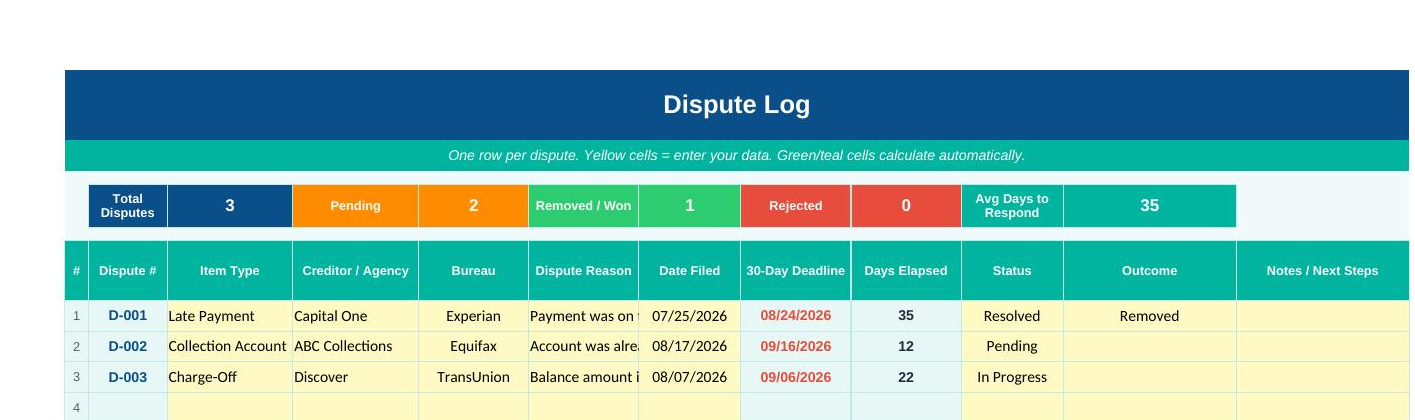
That's exactly what the Dispute Tracker is built for:
- Dispute Log — one row per dispute, with the 30-day deadline and days elapsed calculated automatically the moment you enter the date filed
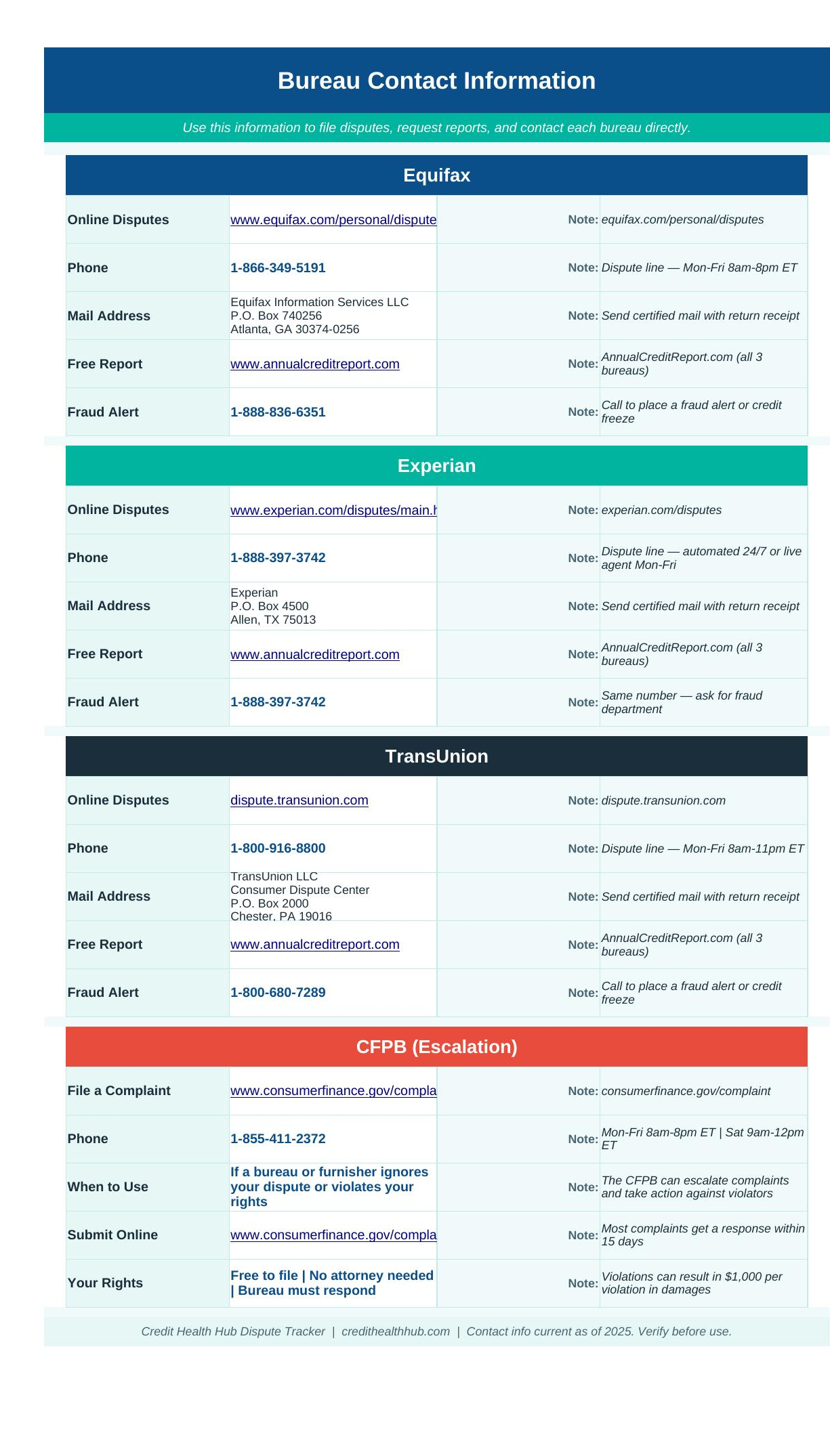
- Bureau Contacts — online dispute links, phone numbers, and mailing addresses for Equifax, Experian, TransUnion, and the CFPB, all in one place
- Letter Templates — a standard dispute letter, a goodwill letter, and a debt validation letter, ready to customize
- Follow-Up Tracker — what to actually do next based on whether the outcome was removed, updated, rejected, or you never heard back
Also working on paying down debt or tracking your score? The Complete Credit Health Bundle includes the Dispute Tracker along with the Credit Score Planner and Debt Payoff Tracker for $24.95 — less than buying all three separately.
Before you file anything, it's worth knowing what's actually legal here versus what's a scam waiting to happen — see Credit Myths vs. Reality. And if you're wondering how a successful dispute fits into your bigger timeline, we cover that in How Long Does It Really Take to Rebuild Your Credit?. New to credit basics altogether? Start with Credit 101.
Get more tips like this
No spam — just practical credit tips and new tools as they launch.
This article is for educational purposes and isn't legal advice. For guidance on your specific situation, consult a consumer rights attorney or file a complaint directly with the CFPB at consumerfinance.gov/complaint.