The 5 FICO Factors and How Much Each One Moves Your Score
Real point-range examples for common actions — not just vague percentages.
Most articles about credit scores show you the same pie chart — 35% this, 30% that — and stop there. The percentages are real, but on their own they don't tell you much. What actually matters is what those weights translate to in practice: how many points a single missed payment can cost you, or why maxing out one card barely moves the needle compared to a late payment.
One honest caveat before diving in: FICO doesn't publish an exact formula, and it doesn't owe anyone one — each person's score reacts a little differently depending on their overall credit file. What follows are real, well-documented ranges from FICO's own published data, not a guarantee of what will happen to your specific score.
The 5 Factors, Ranked by Weight
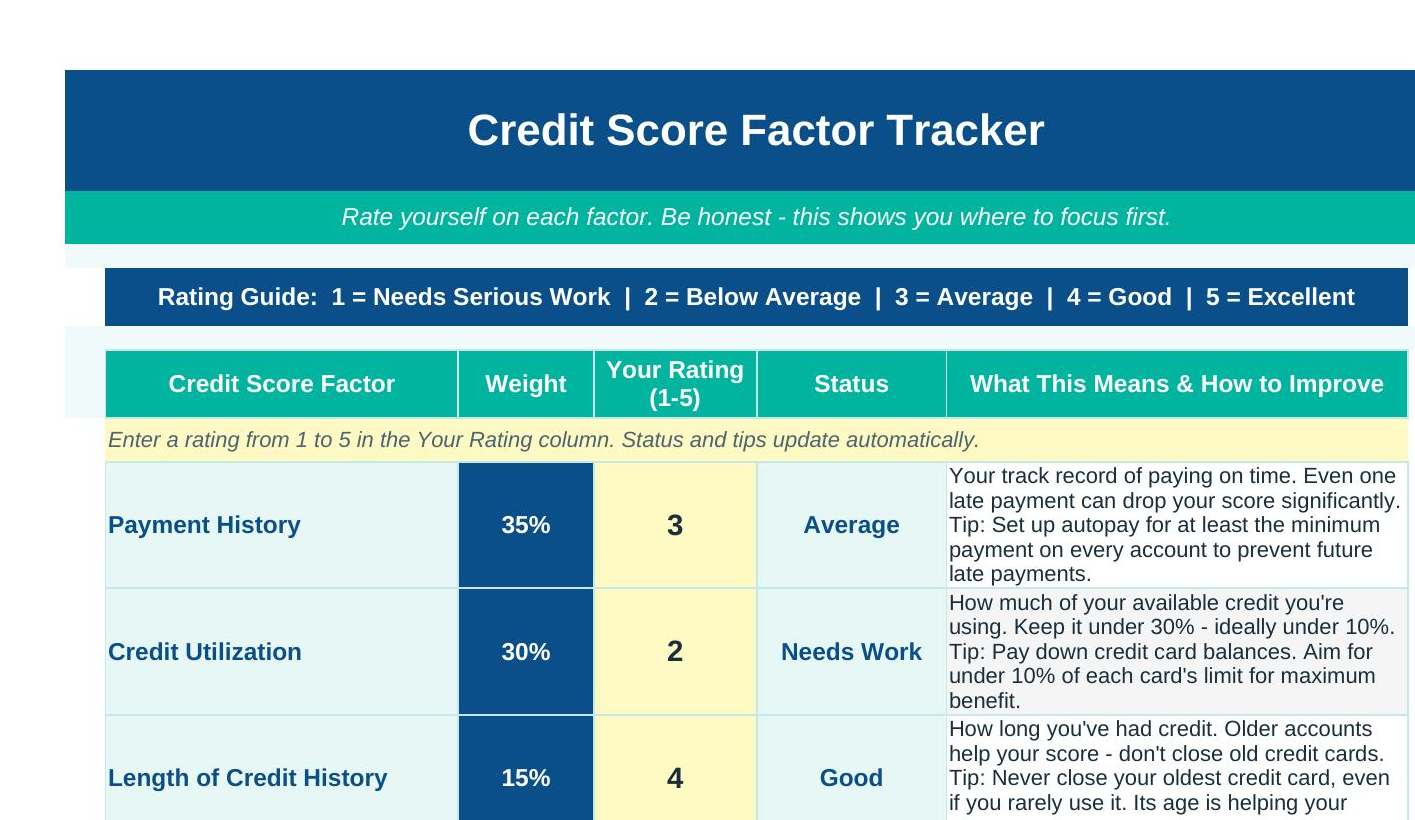
1. Payment History — 35%
The single biggest factor, and the one with the most dramatic real-world swings. A single 30-day late payment can drop someone with an average score (around 680) by 60 to 80 points — and counterintuitively, it can cost someone with excellent credit (around 780) even more, sometimes 90 to 100 points, since they have more "perfect" history to lose. That mark stays on your report for 7 years, though its impact fades well before then as you build new positive history on top of it.
2. Amounts Owed (Utilization) — 30%
This is about the percentage of your available credit you're using, not your income or total debt in dollars. The commonly cited rule is to stay under 30%, but people with the highest scores tend to run well under 10%. The good news: this one is the fastest to fix. Unlike a late payment, a high balance you pay down can improve your utilization — and your score — within a single billing cycle.
3. Length of Credit History — 15%
This factors in the age of your oldest account, your newest account, and the average age across everything you have open. It's the main reason closing your oldest credit card is usually bad advice, even if you never use it — closing it doesn't erase its age from your history immediately, but it stops that account from continuing to age in your favor, and can shift your overall average age downward over time.
4. Credit Mix — 10%
Having a mix of account types — credit cards, an auto loan, a mortgage — shows lenders you can handle different kinds of credit responsibly. This is the one factor you shouldn't chase on purpose. Opening a loan you don't need just to diversify your mix is rarely worth it for a factor that only accounts for 10%.
5. New Credit — 10%
Every hard inquiry — an actual application for new credit — typically costs 5 to 10 points and stays visible for up to 24 months, though its effect on your score fades faster than that. One exception worth knowing: shopping for a mortgage or auto loan within a short window (typically 14–45 days) usually counts as a single inquiry, not several, so rate-shopping doesn't compound against you the way people assume.
Three Myths Worth Killing
Checking your own score hurts it. It doesn't. Checking your own credit is a "soft inquiry" and has zero effect on your score. Only a "hard inquiry" — when a lender pulls your report because you applied for something — counts against you.
Carrying a small balance helps your score. It doesn't, and it costs you interest for nothing. Paying your statement balance in full every month is better for both your score and your wallet.
Your income affects your credit score. It doesn't — FICO Scores don't consider income at all. Income matters when a lender decides whether to approve you, but it isn't one of the five scoring factors.
Tracking This Over Time
Knowing the five factors is one thing. Actually watching your score respond to what you do — and setting a realistic target instead of guessing — is what turns this from trivia into a plan.
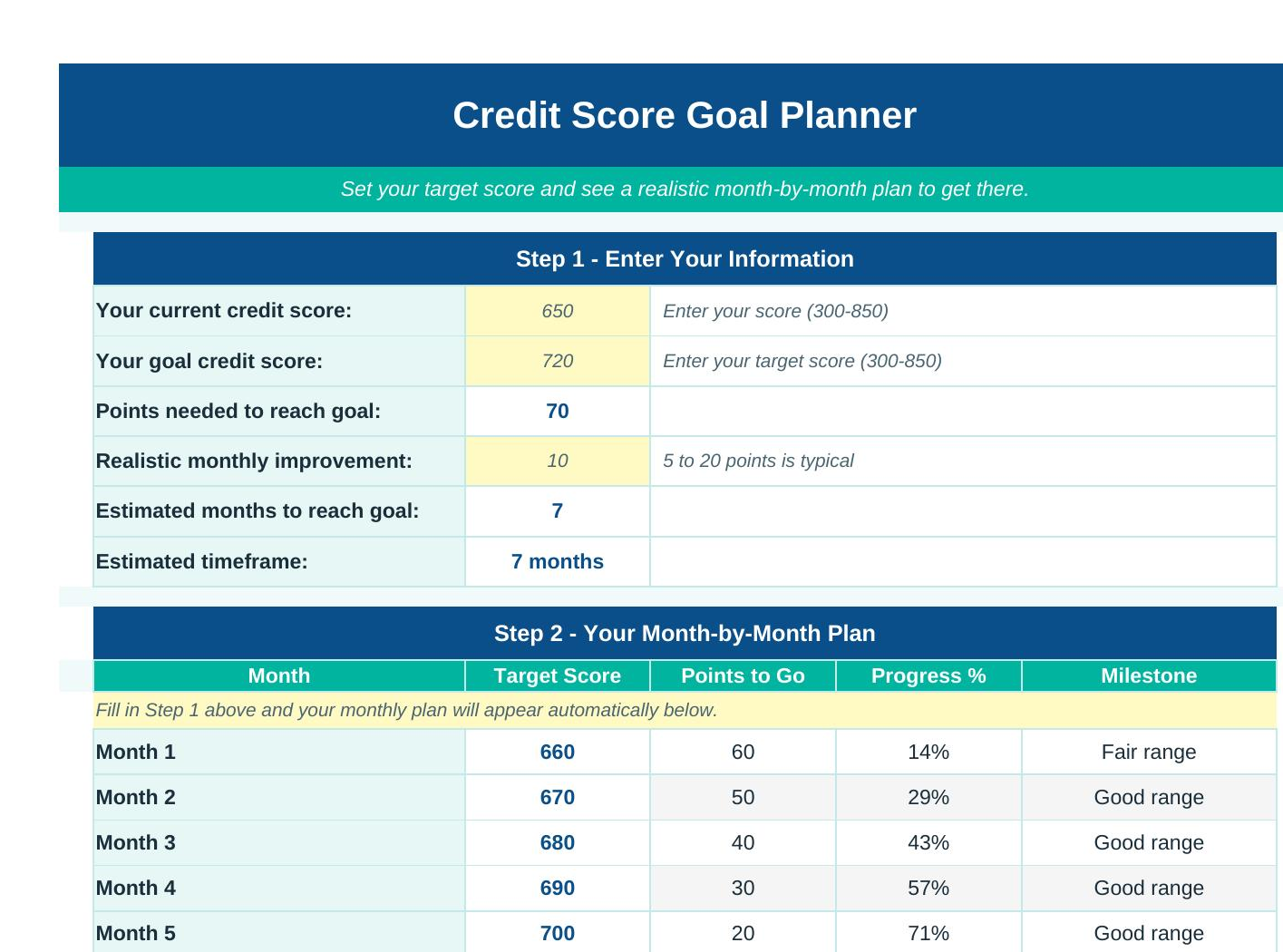
That's exactly what the Credit Score Planner is built for:
- Score Tracker — log your score each month and see your change, your range, and your yearly high/low calculated automatically
- Factor Tracker — rate yourself honestly on all five factors above and see exactly which one to prioritize first
- Goal Planner — set a target score and get a realistic month-by-month plan based on typical improvement rates, not wishful thinking
- Action Checklist — a prioritized list of concrete actions, with a running percentage of what you've actually completed
Also dealing with disputes or debt payoff? The Complete Credit Health Bundle includes the Credit Score Planner along with the Dispute Tracker and Debt Payoff Tracker for $24.95 — less than buying all three separately.
Still getting familiar with the basics? Start with Credit 101: The Complete Beginner's Guide. And if you're wondering how quickly a plan like this actually plays out, see How Long Does It Really Take to Rebuild Your Credit?.
Get more tips like this
No spam — just practical credit tips and new tools as they launch.
This article is for educational purposes and isn't financial advice. FICO Score impacts vary by individual credit profile and are not guaranteed.